
Cold Chain Logistics Compliance: Selecting Food-Grade Plastic Pallets for SG Pharma Hubs
Contents

Singapore has firmly established itself as the premier biomedical and pharmaceutical hub of Asia, hosting global manufacturing plants and advanced distribution facilities for the world’s leading healthcare companies. Managing logistics within this highly specialized ecosystem requires maintaining strict control over temperature-sensitive supply chains, commonly known as cold chain logistics. From life-saving vaccines and oncology treatments to premium organic foodstuffs, maintaining product integrity from the production line to the clinical facility is a strict legal and ethical requirement.
For cold chain warehouse managers and quality assurance directors operating in specialized zones like Tuas or Changi, maintaining regulatory compliance is an ongoing, high-stakes responsibility. Every element inside the cleanroom or temperature-controlled vault must meet rigorous international standards, including Good Distribution Practice (GDP) and Hazard Analysis Critical Control Point (HACCP) certifications. Within these sub-zero environments, the choice of material handling platforms is a critical operational decision; relying on uncertified or traditional porous materials can quickly lead to severe cross-contamination risks and costly regulatory audit failures.
The Contamination Hazards of Wooden Assets in Cold Storage
Traditional material handling relies heavily on wooden pallets due to their historical availability. However, inside a modern, regulated cold chain facility, wood becomes a significant biological and operational liability. Wood is naturally porous and highly hygroscopic, meaning it rapidly absorbs ambient moisture, condensation, and organic fluids.
When moved into sub-zero freezing zones, the absorbed moisture expands and compromises the structural integrity of the wood, leading to frequent splintering. Furthermore, when these assets are brought back into ambient temperatures during loading or transit, the damp fibers create an ideal breeding ground for microscopic fungi, toxic molds, and dangerous bacterial strains like Listeria or Salmonella. Additionally, wooden platforms require chemical treatments or intense heat fumigation (ISPM 15) to kill bugs, which introduces unwanted chemical outgassing risks near delicate biopharmaceutical products and sensitive food packaging.
Uncompromising Safety via Premium HDPE Plastic Pallets
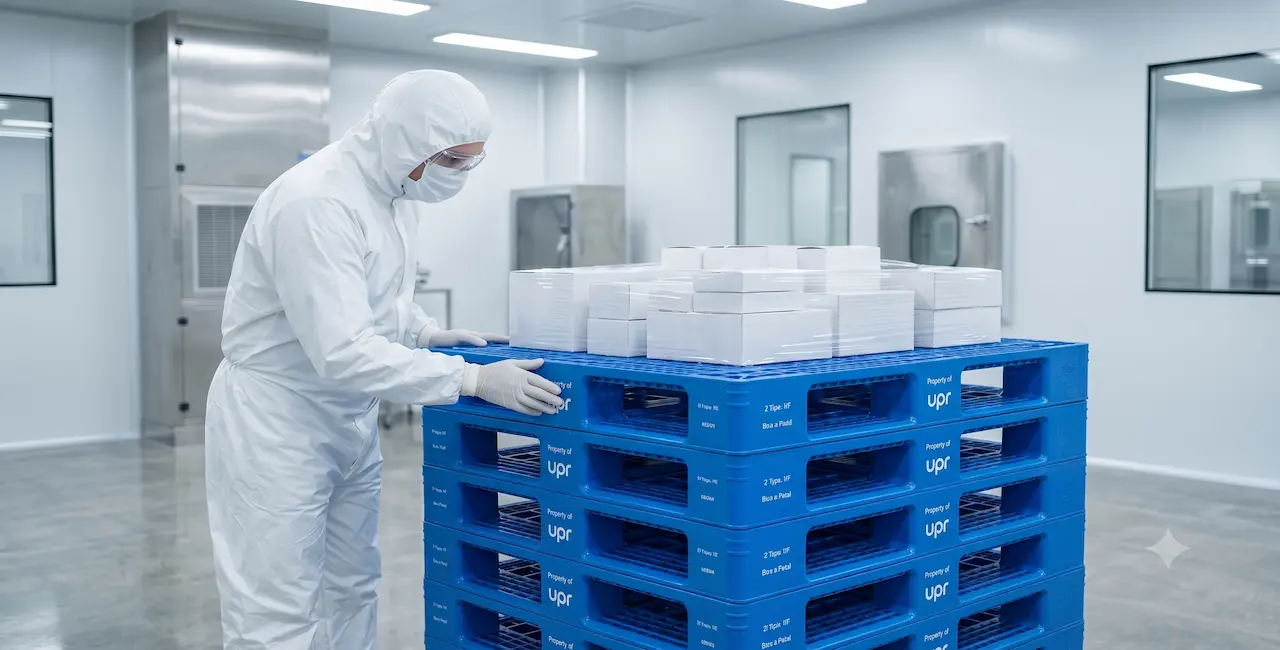
UPR Singapore’s specialized food-grade plastic pallets directly eliminate these biological and regulatory risks by introducing an entirely non-porous, inert material handling platform. Manufactured from high-density polyethylene (HDPE) or polypropylene (PP) using advanced high-pressure injection molding techniques, these premium assets feature completely smooth, sealed surfaces that prevent moisture, bacteria, or chemical contaminants from penetrating the core.
Because plastic is naturally impervious to liquids, these pallets do not absorb moisture or accumulate toxic condensation inside blast freezers or cold storage vaults. They are completely splinter-free, removing the risk of sharp wood fragments puncturing primary product packaging. When it comes to sanitation compliance, UPR’s cleanroom-grade plastic pallets can withstand aggressive high-pressure steam washing, chemical sanitizers, and automated disinfection cycles without warp or degradation, ensuring that your facility continuously passes strict microbial swab tests and regulatory health audits.
Key Strategic Advantages for Singapore’s Biomedical and F&B Sectors
Implementing a standardized, premium plastic asset pool inside your temperature-controlled supply chain delivers immediate operational and compliance benefits:
- Absolute Compliance with SFA and HSA Standards: Utilizing cleanroom-grade plastic platforms satisfies the rigorous sanitary and phytosanitary criteria enforced by the Singapore Food Agency (SFA) and the Health Sciences Authority (HSA).
- Flawless Performance in Sub-Zero Zones: Unlike wooden units that become brittle and fracture under extreme cold, UPR’s heavy-duty plastic platforms maintain exact structural dimensions and load capacity from -20°C up to blast-freezing extremes.
- Seamless Automated System Compatibility: Standardized injection-molded plastic assets feature mathematically uniform dimensions and weight profiles, preventing automated storage and retrieval systems (ASRS) jams and conveyor errors inside smart cold storage facilities.
Protecting Product Integrity at Every Degree
In the high-stakes world of biopharmaceutical distribution and food safety, there is absolutely zero margin for error. A single instance of product contamination due to substandard transport packaging can ruin multi-million dollar shipments, trigger devastating product recalls, and severely damage a corporation’s global reputation.
Transitioning to a premium, rented plastic pallet pooling system with an experienced partner like UPR Singapore ensures that your material handling infrastructure operates at the highest tier of sanitary excellence. By standardizing your cold chain logistics on certified, non-porous assets, your organization can eliminate cross-contamination risks, protect patient and consumer safety, and uphold the flawless quality standards demanded by the world’s most sophisticated industries.
Secure Your Cold Chain Compliance Today
Protect your sensitive pharmaceutical cargo and high-value food products from biological contaminants.
Contact UPR Singapore today to discover how our cleanroom-grade plastic pallet pooling services meet HSA and SFA compliance guidelines.
UPR Singapore Pte.Ltd. > Columns > Logistics > Cold Chain Logistics Compliance: Selecting Food-Grade Plastic Pallets for SG Pharma Hubs
 Contact us