
How Pallet Rental Services Directly Support Singapore’s Green Plan 2030 Goals
Contents
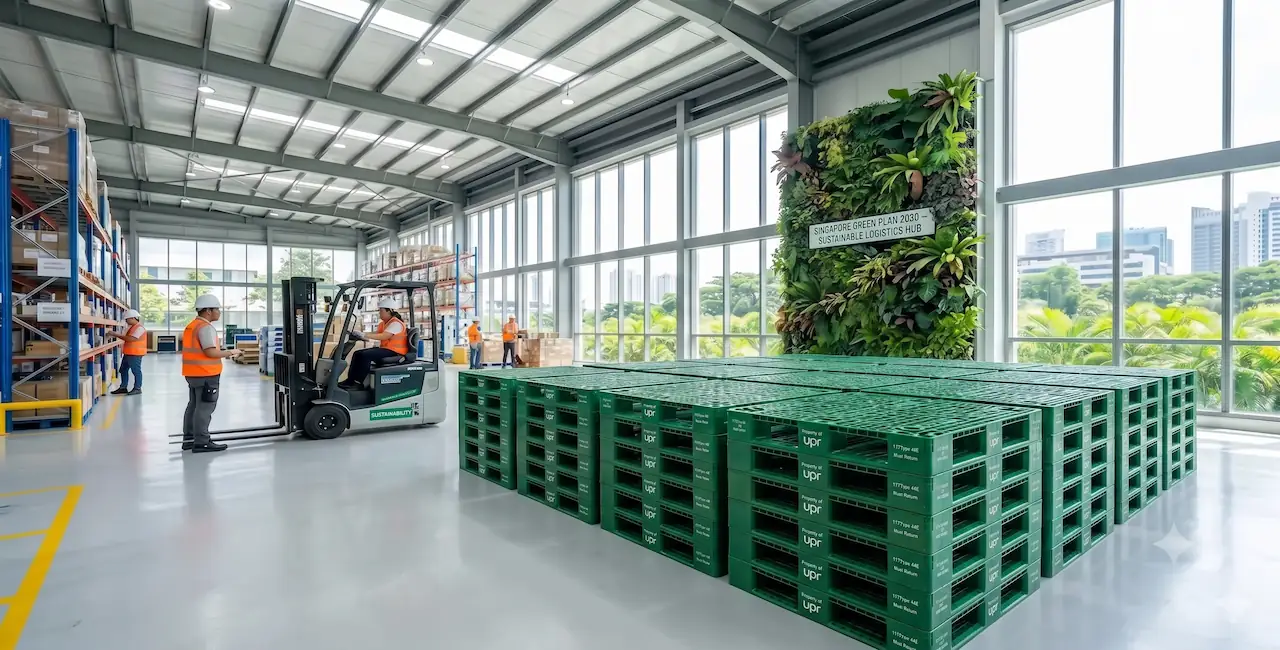
Sustainability is no longer a corporate buzzword in Singapore; it is a national mandate. As the nation charges toward its ambitious Singapore Green Plan 2030, businesses across all sectors are under immense pressure to decarbonize their operations. The logistics and supply chain industry, historically known for high carbon footprints and material waste, stands at a critical crossroads. Every single component of the supply chain must be re-evaluated for efficiency, from long-haul transportation down to the humble warehouse pallet.
For supply chain managers operating within the Lion City, achieving these green targets while maintaining profitability can be a balancing act. This is where the strategic adoption of a circular economy model via professional pallet rental services becomes a game-changer. Rather than adhering to the traditional “take-make-dispose” pattern of purchasing wooden pallets, forward-thinking enterprises are shifting toward shared asset management, commonly known as pallet pooling.
The Waste Crisis of Traditional Pallet Procurement
In a fast-paced logistics hub like Singapore, millions of tons of cargo move through ports and warehouses daily. Traditionally, companies purchased single-use wooden pallets to transport these goods. However, this linear approach introduces significant environmental and financial liabilities. Single-use pallets frequently break down after a few trips, leading to a massive accumulation of industrial wood waste.
In a land-scarce country like Singapore, waste disposal is tightly regulated and financially punishing. Disposing of broken pallets incurs substantial municipal waste fees and adds to the strain on the nation’s limited landfill capacity. Furthermore, the constant demand for fresh timber contributes to deforestation risks elsewhere in the region, contradicting the core pillars of the Singapore Green Plan 2030, which emphasizes resource conservation and a zero-waste economy.
Embracing the Circular Economy with UPR Pooling
UPR Singapore’s shared pallet rental system directly addresses this environmental bottleneck by introducing a highly efficient circular economy model. Instead of buying, maintaining, and eventually discarding private pallet stocks, businesses rent standardized, high-quality plastic and heavy-duty pallets from a shared pool.
Once a shipment reaches its destination, the pallets are collected by UPR, thoroughly inspected, cleaned, and repaired if necessary, before being re-introduced into the supply chain ecosystem. This shared-user model guarantees maximum asset utilization. Because the pallets are built for extreme durability and longevity, their operational lifecycle is exponentially longer than that of a standard single-use wooden platform. By drastically reducing the need to manufacture new assets, the carbon footprint associated with material extraction, production, and international shipping is heavily minimized.

Direct Alignment with Green Plan 2030 Pillars
The Singapore Green Plan 2030 features key pillars such as “Sustainable Living” and “Green Economy.” UPR’s pallet rental system supports these initiatives through tangible operational benefits:
- Zero Waste to Landfill: Reusable plastic pallets do not splinter or rot, eliminating the typical wood debris that litters warehouse floors. Damaged plastic pallets are not thrown away; they are systematically recycled into raw materials to create new industrial products, ensuring a closed-loop system.
- Carbon Footprint Reduction: Optimized logistics networks mean that pallet recovery and distribution routes are highly streamlined. Sharing assets means fewer empty transport trucks running on Singapore’s roads, resulting in lower scope 3 emissions for your organization.
- Resource Efficiency: Companies pay only for the exact number of pallets they use during their peak seasons. This prevents pallet hoarding and reduces the spatial footprint required within high-cost Singapore warehouses, allowing for optimized energy use on the warehouse floor.
A Profitable Path to Sustainability
Shifting to a sustainable logistics model does not mean sacrificing your bottom line. In fact, UPR’s pallet rental service transforms capital expenditure (CapEx) into highly predictable operating expenses (OpEx). Businesses no longer need to invest heavily in massive upfront asset purchases, nor do they need to dedicate valuable warehouse labor to manual pallet repairs and tracking.
As corporate procurement guidelines in Singapore shift heavily toward vendors with verified ESG (Environmental, Social, and Governance) compliance, adopting a rented, circular pallet system gives your business a distinct competitive advantage. It demonstrates a practical, quantifiable commitment to lowering environmental impact, perfectly mirroring Singapore’s national journey toward a net-zero future.
Align Your Supply Chain with Singapore Green Plan 2030
Stop paying high industrial disposal tipping fees for broken wood waste.
Learn more about UPR Singapore’s plastic pallet rental services or visit our
Inquiry Page to transition your warehouse logistics to a certified closed-loop pooling framework today.
UPR Singapore Pte.Ltd. > Columns > Logistics > How Pallet Rental Services Directly Support Singapore’s Green Plan 2030 Goals
 Contact us